
The Safer Pennsylvania Plan
The Pennsylvania Association for Rational Sexual Offense Laws (PARSOL) believes that all sexual abuse is unacceptable and that prevention, treatment, and healing are possible. The Safer Pennsylvania Project turns that belief into an evidence-informed plan for action. Survivors of sexual harm, their loved ones, and all Pennsylvanians deserve policies that work.
Pennsylvania's policies must address sexual harm through effective prevention, not merely responses that sound tough. A sound public-health approach promotes consent, communication, respect for boundaries, early intervention, treatment, and healing. Through evidence-based policies and practices, we can proactively address the sexual harm public-health epidemic.
People who commit sexual offenses must be held accountable, and they are – through prison sentences, mandated psychotherapy, and years of supervision. Accountability matters, and so does stopping harm before it happens.
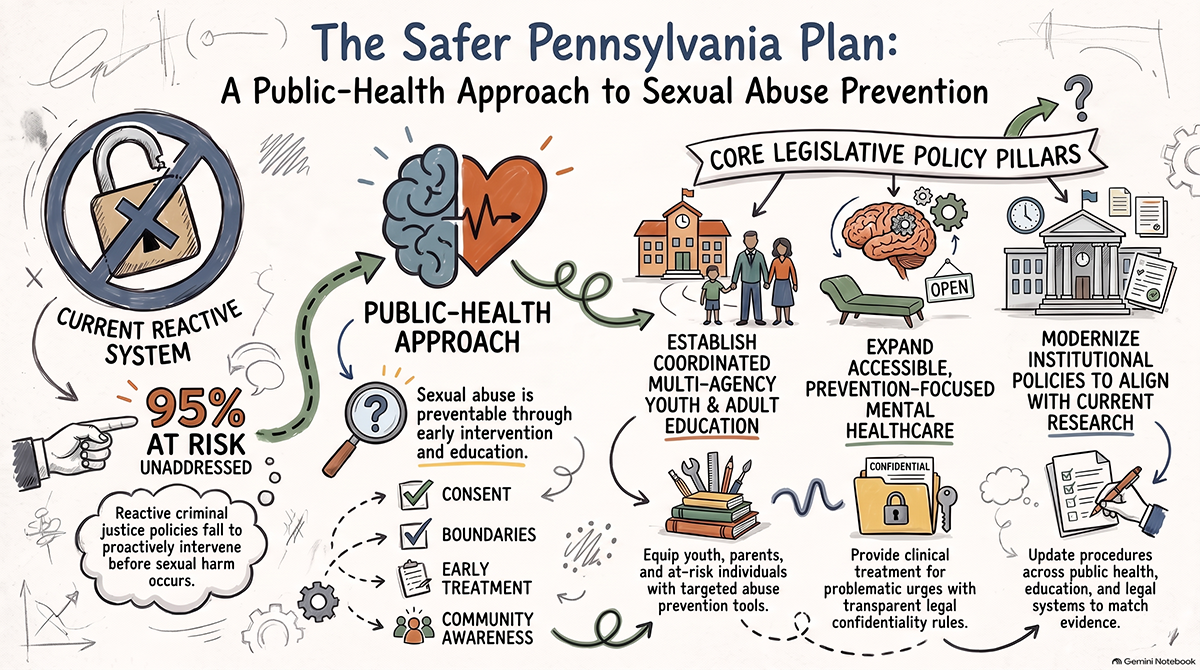
The Safer Pennsylvania Plan calls for:
Recognizing child sexual abuse as a public-health issue.
Recognizing child sexual abuse as a public-health issue and supporting coordinated, multi-agency prevention efforts, including:
- Age-appropriate education about sexual abuse and exploitation in schools and other settings that serve children and youth.
- Research-informed programs that reach people identified as being at elevated risk of committing sexual harm and help them avoid harmful behavior.
- Programs that equip parents, guardians, and other adults responsible for children with the knowledge and tools to discuss sexual abuse risks and safety with children.
Supporting accessible prevention-focused care.
Supporting accessible prevention-focused care for people having difficulty controlling problematic sexual urges, including mental-health services and, when clinically appropriate, psychopharmacological treatment. Services should clearly explain confidentiality protections and the legally required limits of confidentiality, including applicable reporting obligations.
Implementing evidence-based primary prevention.
Implementing evidence-based primary prevention practices across public systems, including public health, education, human services, and the law.
Modernizing policies.
Modernizing policies, procedures, and guidance that conflict with research or are contrary to the evidence. This will advance safety, prevention, treatment, accountability, and healthier communities while ensuring our systems are fair and just.
"Child sexual abuse is not inevitable. It is preventable, and we are the first generation with the tools to make this happen," write Elizabeth J. Letourneau, PhD, and Luke Malone in One in Five: Why Child Sexual Abuse Is Our Biggest Public Health Crisis And What We Can Do to Stop It (2026). Letourneau is director of The MOORE Center for the Prevention of Child Sexual Abuse at the Johns Hopkins Bloomberg School of Public Health.
The One in Five report estimates that current policies leave 95% of those at risk of causing sexual harm unaddressed. [V7] Now that Pennsylvania has the tools, we have a responsibility to use them, and it's the right thing to do.
What it means
Prevention
Child sexual abuse is preventable. This part of the plan treats it the way public health treats other preventable harms: with education for children, support for parents and caregivers, and programs for people at elevated risk of causing harm, coordinated across agencies rather than left to any one of them.
Care
Some people recognize problematic sexual urges in themselves and want help before anyone is harmed. Care should be accessible, voluntary, and clinically appropriate, and people should know up front what is confidential and what the law requires providers to report.
Systems
Public health, education, human services, and the law each touch this issue. The plan asks each of them to use practices the research supports, with an emphasis on primary prevention, which stops harm before it starts.
Policy
Policies, procedures, and guidance that conflict with the research should be modernized so that our systems advance safety, prevention, treatment, and accountability, and so that they are fair and just. This includes Pennsylvania's thirty-year-old registry law.